
-
Lead Lined Drywall
Regular price From $266.00 USDRegular priceUnit price per -
Lead Lined X-Ray Windows (Glass & Frame)
Regular price From $1,375.00 USDRegular priceUnit price per -
Lead Lined Wood Doors
Regular price From $2,483.00 USDRegular priceUnit price per -
Lead Lined Metal Door and Frame
Regular price From $7,591.00 USDRegular priceUnit price per -
Door Lite Kits with X-Ray Safety Glass and Lead Lined Vision Frames
Regular price From $1,363.00 USDRegular priceUnit price per -
Lead Shielding for Electrical Boxes
Regular price From $187.00 USDRegular priceUnit price per -
Mobile X-Ray Barrier
Regular price From $3,990.00 USDRegular priceUnit price per -
Lead Lined Plywood
Regular price From $488.00 USDRegular priceUnit price per -
X-Ray Lead Shielded Curtains
Regular price $1.00 USDRegular priceUnit price per -
Nuclear Lead Glass Windows
Regular price $0.00 USDRegular priceUnit price per





PET/CT Shielding: What Most Rooms Need
A typical PET/CT suite includes shielding for walls, doors, viewing windows, and wall penetrations (electrical boxes, data, plumbing, etc.). Your shielding design (and required lead thickness) should be determined by a qualified radiation physicist and local authority having jurisdiction.
- Lead-lined walls using lead-backed drywall (fast, clean installs)
- Shielded doors to maintain continuity through openings
- Lead glass windows for technologist visibility with proper lead equivalency
- Outlet / electrical box shielding to prevent leakage at penetrations
Tip: PET/CT projects often require special attention to adjacent spaces (control rooms, corridors, uptake rooms). Always build to the shielding report.
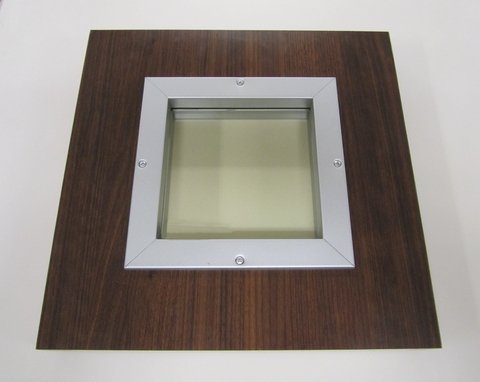
Lead Glass Windows for PET/CT Rooms
Maintain clear line-of-sight between the control area and scanner room while meeting radiation shielding requirements. Our lead glass windows are engineered for imaging environments and can be specified to match your shielding report.
- Available across multiple lead equivalencies and sizes
- Designed for hospital and imaging-center workflows
- Built for long-term clarity and durability
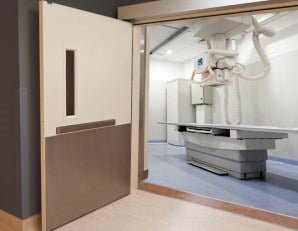
Lead-Lined Wood Doors for PET/CT Suites
Doors are one of the most common weak points in room shielding. Lead-lined doors help maintain continuous protection at entries to PET/CT scan rooms, uptake rooms, and adjacent support spaces.
- Configured to match common healthcare door preps and hardware
- Lead thickness options to align with your shielding spec
- Ideal for new construction and renovations
Lead-Backed Drywall for PET/CT Room Walls
Lead-backed drywall is a fast, field-proven way to create shielded barriers for PET/CT rooms. It installs similarly to standard drywall while providing integrated radiation shielding.
- Efficient installation for contractors and hospital projects
- Lead thickness options to match shielding requirements
- Clean finished surfaces for clinical environments
Electrical Box Lead Shielding for PET/CT Rooms
Every penetration in a shielded wall is a potential leakage path. Lead shielding for electrical boxes helps maintain barrier continuity at outlets, junction boxes, and similar wall penetrations—especially important in PET/CT environments.
- Designed to integrate with standard stud layouts and electrical box locations
- Supports both new installs (before drywall) and shielding best practices
- Helps reduce the risk of “hot spots” at penetrations
Recommended PET/CT Room Package
If you’re sourcing a full PET/CT room build-out, these four components cover the core shielding scope for many projects:
- Walls: Lead-Backed Drywall
- Door openings: Lead-Lined Wood Doors
- Observation: Lead Glass Windows
- Penetrations: Electrical Box Lead Shielding
Need help matching the shielding report? Send your drawings and physicist requirements. We’ll help you select the correct product configurations and quantities.
PET/CT Shielding FAQs
What makes PET/CT shielding different from standard X-ray shielding?
PET isotopes (such as FDG) emit higher-energy radiation than typical diagnostic X-ray applications. PET/CT facilities often require different shielding strategies and/or increased thickness in key areas based on workload, occupancy, distance, and layout. Always follow your physicist’s shielding report.
How do I choose the correct lead thickness?
Lead thickness must be specified by a qualified radiation physicist (or local authority) for your exact room layout and workload. Once you have the shielding requirements, we can help you match each product (drywall, doors, windows, and penetration shielding) to the specified lead equivalency.
Do I need shielding for electrical outlets and boxes?
Yes—penetrations can become leakage points. Electrical box lead shielding helps maintain wall integrity and reduce the risk of localized radiation leakage (“hot spots”) around outlets and junction boxes.
Can you help with a full PET/CT room materials list?
Yes. Share your shielding report and drawings, and we’ll help you identify the correct shielding components and typical quantities for the project scope.
What should I verify when materials arrive?
Inspect shipments at delivery and note any visible damage before signing. Confirm product counts, sizes, and shielding ratings match the order and submittals.